
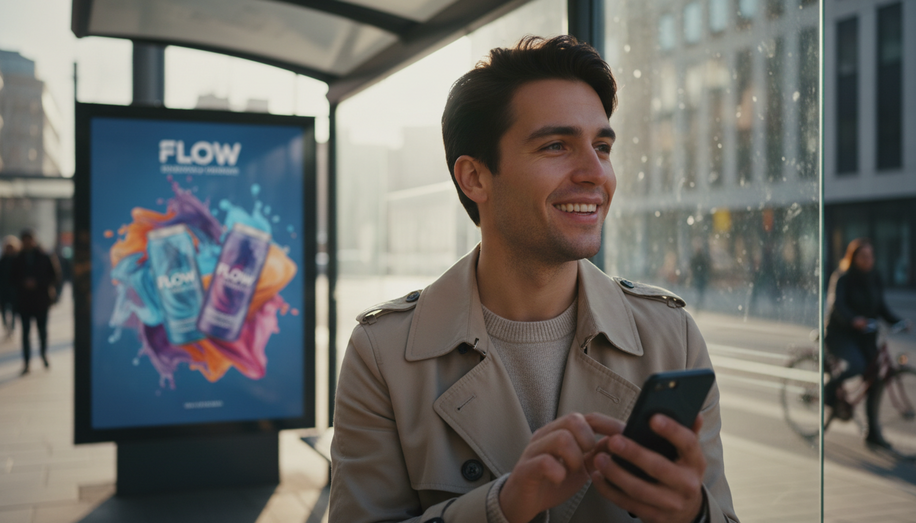

In the bustling corridors of urban life, where billboards command attention from commuters and shoppers alike, a quiet revolution is unfolding. Geofencing technology is bridging the gap between the static power of out-of-home (OOH) advertising and the dynamic precision of digital marketing, turning passive exposure into active engagement. By creating virtual boundaries around physical ad locations, brands can identify audiences who encounter OOH campaigns and retarget them online with personalized messages, forging a seamless path from awareness to conversion.
This synergy begins with the fundamentals of geofencing. Advertisers use GPS, Wi-Fi, or RFID systems to draw invisible perimeters around billboards, transit stations, bus benches, or shopping districts—areas where OOH ads thrive. When a mobile device enters these zones, location services on smartphones capture the event, signaling that the user has likely viewed the ad. The data isn’t just collected; it’s activated. Programmatic platforms then serve complementary digital ads—perhaps a mobile banner echoing the billboard’s promotion or an app notification offering a discount—as the consumer moves through their day. What was once a fleeting glance at a highway sign becomes a persistent, relevant conversation across channels.
The impact on return on investment is profound. Traditional OOH excels at broad reach and brand recall, but its effectiveness has historically been hard to measure beyond impressions. Geofencing changes that by providing tangible metrics: who saw the ad, how many visited a store afterward, or which users converted online. E-commerce brands, in particular, leverage this to connect offline discovery with online purchases, creating unified journeys that boost engagement rates and reduce ad waste. For instance, a consumer spotting a product on a stadium billboard might later receive a tailored mobile ad for that item while browsing nearby restaurants, reinforcing the message and prompting action.
Implementation is straightforward yet strategic. Campaigns start with mapping optimal geofence sizes—tight enough for accuracy around a single billboard, broader for high-traffic hubs—to capture genuine exposures without irrelevant data. Integration with OOH involves synchronizing visuals: a bold billboard creative pairs with matching digital retargeting, ensuring brand consistency. Real-time adjustments amplify results; weather, events, or time-of-day data from geofencing allows dynamic tweaks, like promoting rain gear near a trailhead billboard during a storm. Outdoor enthusiasts, for example, can be targeted at hiking spots or golf courses, where geofences trigger ads for gear or bookings, capitalizing on high-intent moments.
Beyond retargeting, geofencing unlocks deeper engagement. App-based experiences come alive when users who pass an OOH ad receive immersive follow-ups, such as augmented reality filters or gamified challenges tied to the campaign. This multi-touch approach heightens recall—studies show sequential messaging across OOH and digital increases ad effectiveness by creating familiarity without repetition fatigue. Data analytics from these efforts reveal audience patterns, optimizing future OOH placements: which billboards drive the most foot traffic, or how demographics respond to retargeted offers.
Challenges exist, of course. Privacy concerns demand transparent opt-ins and compliance with regulations, while accurate boundary definition prevents overreach. Battery drain on devices and location accuracy in dense urban areas require refined tech, but advancements in location intelligence platforms are addressing these. Best practices emphasize clear objectives—brand awareness, store visits, or app downloads—and eye-catching OOH designs that complement digital extensions.
Real-world success stories abound. Automotive brands geofence dealership billboards to retarget drivers with test-drive incentives, while retailers near transit hubs push app-exclusive deals to exposed shoppers. In competitive markets, this edge translates to measurable lifts: higher click-through rates, increased store traffic, and superior ROI compared to siloed campaigns. Effortless Outdoor Media, for one, pairs geofencing with prime billboard spots to supercharge client results, proving the model’s scalability.
As OOH evolves in a connected world, geofencing stands as its digital accelerator. It transforms exposure into engagement, measurement into optimization, and broad reach into precise persuasion. For advertisers, the message is clear: the billboard isn’t the end of the story—it’s the spark that ignites a digital fire. This powerful fusion not only elevates campaigns but redefines what’s possible when physical and virtual worlds collide.