
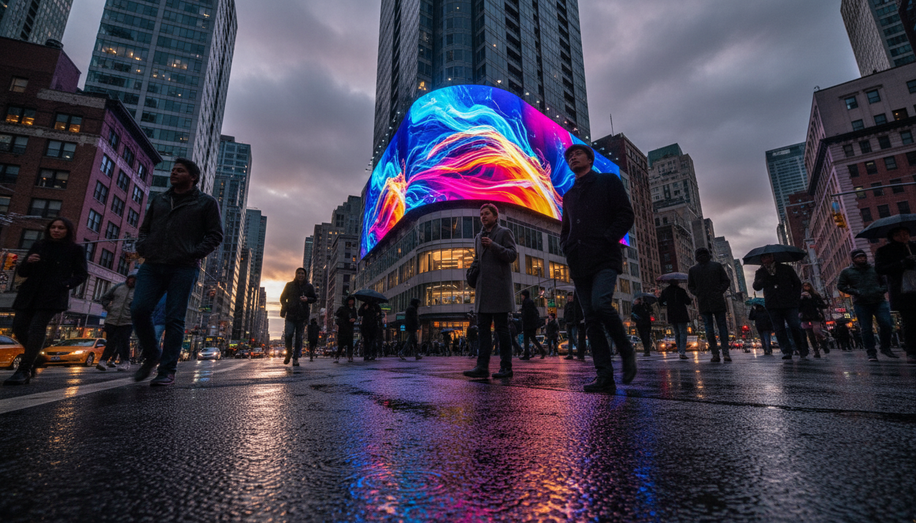

In the bustling artery of a city highway, where commuters grip steering wheels amid rush-hour gridlock, a billboard’s message lands differently than it would in the serene glow of a suburban park at dusk. This stark contrast underscores a fundamental truth in out-of-home (OOH) advertising: context is not merely a backdrop but a powerful determinant of an ad’s effectiveness. Physical surroundings, time of day, and the audience’s prevailing mindset shape how messages are noticed, processed, and remembered, often dictating whether a campaign sparks engagement or fades into irrelevance.
The physical environment sets the stage for OOH’s unique persuasive power. Strategic placement in high-traffic zones—busy intersections, shopping districts, or commuter routes—amplifies visibility by exposing ads to captive audiences who cannot scroll past or mute them. Research confirms that location profoundly influences recall and response; for instance, billboards positioned for optimal viewing along highways outperform those in less dynamic settings, as drivers’ eyes naturally seek salient visuals during routine travels. Exterior placements garner more engagement than indoor ones, with static billboards proving eight times more effective for QR code scans than mobile transit ads carrying identical content, likely due to the stability allowing easier interaction. Urban landscapes demand bold contrasts and hierarchy in design to cut through clutter, while suburban spots benefit from targeted resonance with local demographics, such as family-oriented imagery near schools. Yet, this environmental leverage cuts both ways: overcrowded urban billboards risk blending into a sea of competition, underscoring the need for advertisers to analyze traffic patterns and zoning to secure prime, uncluttered real estate.
Time of day further refines this equation, aligning ads with the rhythms of daily life. Morning commuters, bleary-eyed and task-focused, respond best to concise, high-contrast messages that demand minimal cognitive effort—think large fonts, vivid colors, and peripheral cues like humor or striking photography, which boost recall without taxing limited attention. As the day progresses, lunch-hour crowds in business districts might linger on dynamic digital screens tailored to professionals, while evening placements near entertainment hubs capture relaxed moods ripe for impulse-driven appeals. Seasonal and event-based timing elevates this precision: weather-responsive digital OOH can pivot to hot coffee promotions on chilly mornings or iced beverages during heatwaves, fostering relevance that heightens interest. Holidays like Christmas or major events such as concerts amplify reach, as heightened consumer awareness and spending sprees make time-sensitive discounts irresistible in high-traffic areas. These temporal strategies exploit the Elaboration Likelihood Model (ELM), where OOH’s fleeting exposures favor the peripheral persuasion route—relying on visuals and repetition over deep analysis—making timing crucial for attitude shifts and behavioral nudges.
Perhaps most intriguingly, the audience’s mindset at the moment of exposure can transform a standard ad into a memorable catalyst. OOH thrives as a ‘background medium,’ infiltrating subconscious preferences through repetition in familiar environments, yet its impact surges when syncing with emotional states. A stressed commuter in heavy traffic may dismiss intricate copy but latch onto a humorous visual that offers fleeting relief, while a leisurely park stroller absorbs nuanced storytelling unhurriedly. Studies highlight how involvement levels modulate processing: high-engagement contexts, like event proximity, draw central route elaboration for detailed persuasion, whereas low-elaboration drives—like highway drives—lean on saliency and situational relevance for quick affective gains.[66 from 1] Mindset also ties to demographics; language, imagery, and cultural cues tailored to age or locale foster connection, as seen in campaigns that resonate during shopping sprees or commutes. In climate messaging, for example, larger, general ads in high-visibility spots outperform niche ones, capitalizing on broad environmental moods over specific appeals.
Ultimately, mastering these contextual layers demands data-driven precision. Advertisers must blend traffic analytics, demographic profiling, and real-time triggers—weather, events, even news alerts—to optimize OOH’s omnipresence. Executional cues like size, color, and brevity remain vital, but ignoring environment, timing, or mindset risks squandered potential. As digital OOH evolves with programmatic buying, the future lies in hyper-contextual campaigns that anticipate audience states, turning passive passersby into active responders. In an era of ad fatigue, context isn’t just king—it’s the invisible force that makes OOH not only seen, but felt.