
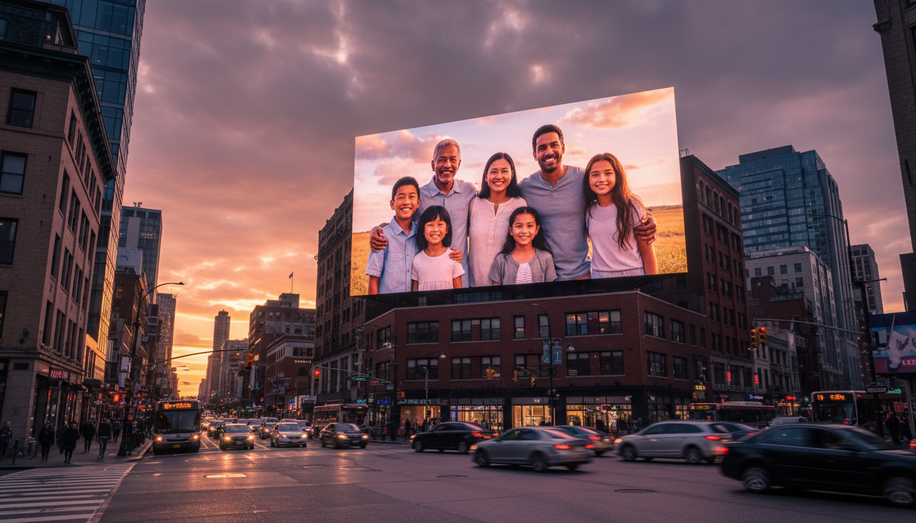

In the bustling streets of major cities, where billboards tower over commuters and digital screens flicker with brand messages, out-of-home (OOH) advertising holds a unique power to shape perceptions and influence behaviors. Yet, as audiences grow more diverse, the question arises: do these massive displays truly reflect the multifaceted society they serve? Showcasing diverse voices and images in OOH campaigns is not just a moral imperative but a strategic necessity, enabling brands to forge deeper connections with broader demographics and drive tangible business results.
Consumer data underscores this urgency. A 2023 Numerator survey of over 1,200 shoppers across generations revealed that 63% consider diverse representation in advertising important, with racial and ethnic diversity topping the list at 62%, followed closely by age diversity and disability representation at 56% each. Younger consumers, particularly Gen Z and Millennials, place even greater emphasis on LGBTQ+ representation (45% and 40%, respectively) and gender identity (40% and 44%). This sentiment translates to action: 47% of respondents said they are likely to purchase from brands that feature diversity in their ads, while only 12% indicated they would avoid such brands. For OOH, which reaches people in public spaces without the filter of algorithmic feeds, this resonance is amplified. Nearly six in ten Black, Asian, and Hispanic American consumers report being much more likely to notice OOH ads reflecting their cultural identity, compared to just one in four white adults.
OOH’s scale and inescapability make it an ideal medium for inclusivity, yet historical patterns reveal shortcomings. A 2014 study in Los Angeles analyzed outdoor ads across seven neighborhoods varying by race, income, and education. It found that at-risk communities and those with higher proportions of people of color hosted more harmful content—such as sexualized portrayals, violence, alcohol, and tobacco promotions—comprising at least 24% of ad space in every area examined. Asian American neighborhoods like Chinatown and Latino areas like Van Nuys bore disproportionate loads of such imagery, often near schools and playgrounds. This disparity highlights how exclusionary or stereotypical depictions can alienate audiences and undermine public health, particularly in vulnerable communities.
Progress is evident, however. Recent surveys show momentum: more than half of 18- to 34-year-olds now report often seeing people who look like them in ads, an 8 percentage point increase in just four months as of late 2024. OOH brands are leveraging this by tailoring campaigns to local demographics. For instance, studies indicate 56% of Hispanic, 58% of Black, and 59% of Asian-American consumers are significantly more likely to engage with culturally resonant OOH, especially in diverse markets like key DMAs where Black Gen Z populations are projected to exceed 42.5 million by 2025. Authentic representation—hiring diverse creative teams and avoiding tokenism—is key, as emphasized by industry leaders who stress that inclusion must permeate from concept to execution.
The business case extends beyond noticeability to societal impact and sales lift. Numerator found 51% of consumers view diversity in advertising as having a positive societal effect, rising to 71% among Black respondents and 62% among Asians. In OOH, this manifests in real-world action: a Kantar study noted OOH’s 13.3% edge in ad awareness over digital channels, positioning it to address representation gaps effectively. Google data further reveals imbalances, such as white characters appearing 4% more often in outdoor settings and dominating media/entertainment ads at 69%. Correcting these through intentional diversity not only boosts relevance but combats “diversity fatigue” by evolving toward genuine equity.
Challenges persist, including generational divides. While 47% of consumers deem current representation “just right,” 31% feel there is too much and 22% too little—with Gen Z 44% more likely and Black consumers 76% more likely to demand more. Boomers and Gen X, conversely, lean toward viewing it as excessive. OOH advertisers must navigate this by prioritizing data-driven, context-specific strategies: amplifying underrepresented voices in high-diversity zones while ensuring broad appeal elsewhere.
Ultimately, diverse OOH campaigns resonate because they mirror reality. In a nation where ethnic diversity in advertising workforces has climbed to 32.3% as of 2023, and women hold 60.9% of roles, the industry is better equipped than ever to deliver. Brands that invest here don’t just sell products; they build loyalty across divides. As urban landscapes evolve, OOH stands at the forefront, proving that representation isn’t optional—it’s the pathway to capturing hearts, minds, and markets in an undeniably pluralistic world.