
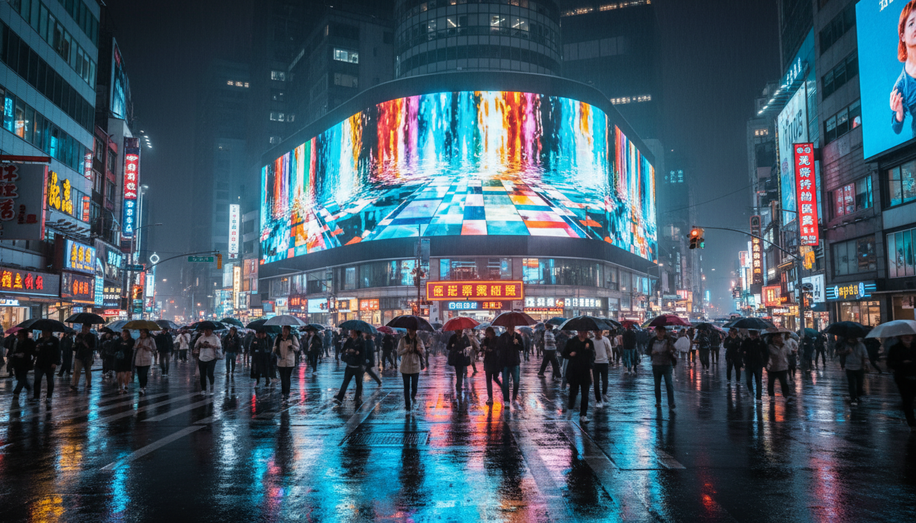

For more than a century, billboards have served as a constant fixture in the advertising landscape, standing silently along highways and in city centers to capture the attention of passersby. Yet this static format, which has remained largely unchanged since the 1830s, is undergoing a fundamental transformation. Digital screens are replacing printed panels, and advertisers are discovering that the billboard—once considered a one-dimensional medium—can now deliver dynamic, data-driven campaigns that respond to real-time conditions and audience behavior.
The shift from traditional to digital out-of-home (DOOH) advertising represents more than just a technological upgrade. It signals a broader reimagining of how brands engage with consumers in physical spaces. Digital billboards leverage LED technology and programmable displays to create experiences that were impossible with static formats. Where a traditional billboard might display a single advertisement for months, a digital screen can rotate multiple campaigns throughout the day, optimizing content based on time, location, and audience demographics. This flexibility has become a competitive advantage in an increasingly crowded advertising marketplace.
The market data underscores the significance of this transformation. According to the Outdoor Advertising Association of America, digital out-of-home advertising grew by 4.5% in 2021, outperforming traditional advertising mediums. More broadly, Statista projects that digital out-of-home spending will surge from $6.7 billion in 2019 to $15.9 billion in 2027, reflecting growing advertiser confidence in the medium’s effectiveness. This growth is driven partly by the decreasing cost of high-quality LED displays, which has made digital billboard deployment more accessible to brands of varying sizes.
Beyond raw inventory advantages, digital displays enable unprecedented creative storytelling. Interactive billboards equipped with sensors and cameras can detect passersby and adjust content in real time, creating moments of genuine engagement. A notable example emerged in Tokyo’s Shibuya Crossing, where a billboard changes its display based on time of day and pedestrian traffic patterns. These capabilities transform billboards from passive backdrops into active participants in the consumer experience, capturing attention in ways static advertisements simply cannot match.
Perhaps most significantly, digital billboards provide the data insights that modern marketing demands. Advertisers can now track the number of views, analyze viewer demographics, and measure campaign effectiveness in real time—transforming outdoor advertising from an impressionistic medium into a precision tool. This data-driven approach extends further through programmatic DOOH, an automated buying process that allows media buyers to target specific demographics based on factors including time of day and weather conditions. When predetermined conditions are met, advertisements display automatically, ensuring optimal relevance and placement.
The operational advantages are equally compelling. Traditional billboards require costly reprinting and physical installation each time content changes, but digital displays update instantaneously at negligible cost. A single digital billboard can accommodate multiple advertisements, cycling through them every eight to fifteen seconds, which dramatically increases inventory and revenue potential for media owners. For advertisers, this means the ability to schedule campaigns at specific times—displaying a timely commercial after a sporting event, for instance—or to maintain consistent presence without the friction of logistics and reprinting.
There are broader implications as well. Despite environmental concerns surrounding digital screens, modern digital billboards often consume less energy than traditional lighting through LED technology, and can be programmed to power down during non-peak hours. The ability to display multiple ads on a single billboard also reduces printing and distribution waste, positioning digital displays as a more sustainable alternative to their static predecessors.
As technology continues to advance, the line between traditional and digital outdoor advertising continues to blur. What emerges is not the replacement of billboards but their evolution—from one-way communication tools into interactive, data-responsive platforms that meet consumers where they already are. For brands seeking meaningful engagement in public spaces, this transformation represents both opportunity and necessity, reshaping what outdoor advertising can achieve in an increasingly digital world.
This transformation presents both immense opportunity and complex challenges for advertisers seeking to maximize its potential. To effectively navigate this dynamic new landscape, platforms like Blindspot offer crucial tools, providing real-time campaign performance tracking, precise audience measurement, and robust programmatic DOOH campaign management to ensure optimal relevance and measurable ROI in every public space. Discover how to elevate your outdoor strategy at https://seeblindspot.com/