
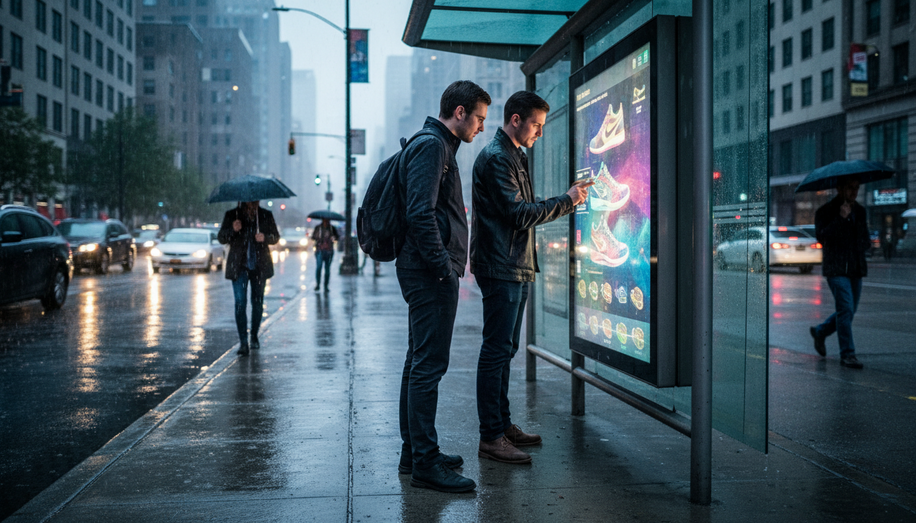

In the bustling heart of urban landscapes, where eyes dart between screens and streets, interactive out-of-home (OOH) advertising has evolved from passive billboards to dynamic touchpoints that demand participation. These campaigns transform passersby into active players, leveraging digital screens, augmented reality, motion sensors, and QR codes to forge memorable connections that ripple across social media and sales metrics.
Consider Coca-Cola’s innovative bus shelter activations in Singapore back in 2016, a blueprint for consumer engagement that remains relevant today. Partnering with Clear Channel, the brand installed displays where commuters could strike poses with Coke-themed filters to generate personalized GIFs. A quick scan of a QR code delivered a voucher for a free drink, blending fun with instant reward. The result? Spikes in social shares and high redemption rates, proving that simple, visual interactivity turns fleeting glances into lasting interactions.
Fast-forward to Tokyo in 2024, where Coca-Cola doubled down with an AR-enabled digital vending machine billboard. Pedestrians waved their hands to “grab” a virtual bottle from the screen, triggering animated reactions and customized messages that made the experience feel personal and playful. This seamless fusion of physical gesture and digital response not only captivated crowds but also amplified the brand’s whimsical identity, encouraging shares that extended the campaign’s reach far beyond the street.
Samsung has mastered this realm with spectacle-driven DOOH. At SoFi Stadium, their colossal Infinity Display—billed as the largest digital sports signage—immerses fans in vivid promotions, drawing eyes during high-stakes games and inviting brands to co-create buzzworthy content. Globally, the 2022 “Tiger in the City” campaign unleashed a roaring 3D tiger on billboards in New York and beyond, prowling from the screen to symbolize the Galaxy S22’s boldness. Onlookers stopped in awe, phones raised to capture the leap, generating organic virality that embodied courage through communal wonder.
Nike, too, harnesses 3D illusions for participatory magic. In Tokyo, a billboard shoebox periodically creaked open to unveil new Air Max designs, building suspense that exploded into social media frenzy. The campaign’s viral traction turned a local display into a global conversation, with pedestrians filming the reveal and tagging friends, effectively crowdsourcing amplification. Similarly, the Star Trek: Picard promotion docked a massive 3D Enterprise in Times Square, jolting commuters into another dimension. Organizers invited Trekkies for a live event, cameras rolling to fuel client content, while the optical wizardry compelled spontaneous photos that buzzed online.
Beyond visuals, data-driven interactivity sharpens precision. Mad Mex, an Australian eatery, used store sales data to trigger programmatic ads near hungry audiences, dynamically tweaking messages around taste, health, or value. Reaching 2.9 million impressions, it lifted sales by 9%, showing how real-time relevance converts exposure into foot traffic. Aperol Spritz took cues from the weather, activating DOOH near social hotspots only when temperatures hit 66°F (19°C). This contextual trigger aligned perfectly with outdoor cravings, maximizing engagement by timing the invitation just right.
Fast food giants like Jack in the Box and Church’s Texas Chicken prove proximity and conquesting supercharge results. Jack’s cheddar burger campaign blanketed venues within two miles of outlets, using sizzling videos to lure rivals’ customers; it drove 1.3 million visits with mouthwatering visuals that held attention captive. Church’s layered location targeting with mobile retargeting, yielding 19.6 million impressions, 2.4 million store visits, and a 12.2% conversion rate—tangible proof that personalized nudges at key moments seal the deal.
Sports and events amplify this further. A DOOH blitz for a major game layered live updates across billboards, bus shelters, and kiosks, boosting awareness by 7%, consideration and tune-in by 25%, and TV viewership by 24%. PrizePicks echoed this near stadiums, blending programmatic buys with influencer creatives for an 80% lift in consideration and 103% in favorability, making fans feel the game’s pulse through tailored hype.
Even public service campaigns engage profoundly. Warsaw’s 2022 smog alert featured a 3D dragon snarling on screens when air quality tanked, while lungs shifted colors with pollution levels—visceral cues that spurred awareness without a hard sell.
These cases underscore interactive OOH’s power: it thrives on shareability, blending unavoidable visibility with participatory hooks that drive metrics from buzz to buys. As technology advances—think motion-tracking cameras, social integrations, and AR—brands must prioritize simplicity and joy to ensure consumers don’t just see ads, but join them. In an era of fragmented attention, these touchpoints remind us that the most effective advertising doesn’t shout; it invites.