
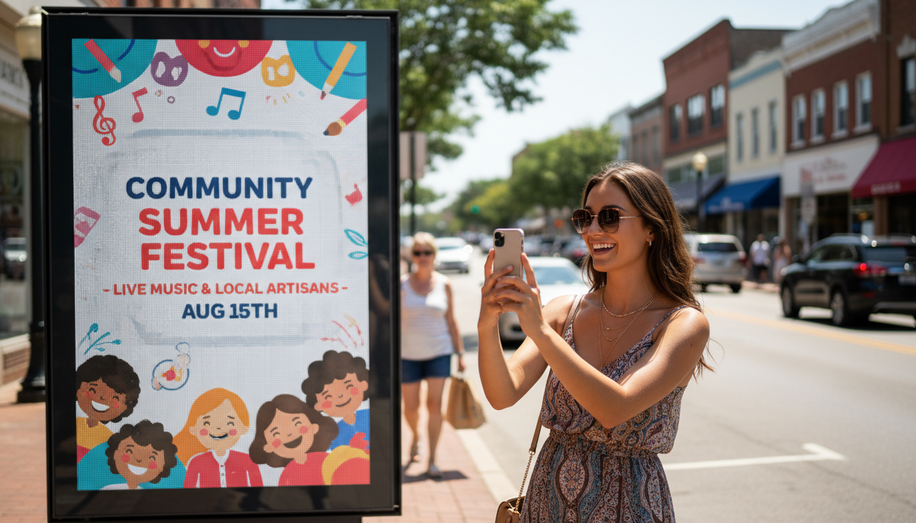

In the bustling streets of urban centers and quiet suburbs alike, out-of-home (OOH) advertising has long commanded attention with its unmissable presence. Billboards towering over highways, transit wraps gliding through cityscapes, and digital displays pulsing with dynamic content create immediate visual impact, reaching audiences in moments of high receptivity during commutes or daily errands. Yet, as digital saturation breeds ad fatigue, savvy marketers are turning to an unexpected amplifier: local influencers. By partnering these community-rooted voices with OOH campaigns, brands unlock exponential reach, blending physical permanence with social virality to drive engagement far beyond static impressions.
Local influencers—think micro-influencers with 10,000 to 50,000 followers centered on neighborhood happenings, food scenes, or lifestyle niches—offer authenticity that resonates deeply within specific locales. Unlike broad national celebrities, they embody the pulse of a place, from recommending hidden coffee spots in Brooklyn to spotlighting trail runs in the Rockies. When these figures engage with OOH elements, such as posing in front of a branded mural or scanning a QR code on a bus shelter ad, they transform passive exposure into active conversation. Research shows that 80% of social media users encounter OOH ads in their feeds, often shared by influencers or everyday consumers, prompting 48% to take action like searching a brand or visiting a site. This digital ripple effect turns a billboard’s broad visibility into targeted, trust-building interactions.
Consider the mechanics at play. OOH excels in high-traffic zones, delivering 24/7 exposure to diverse demographics with lower cost-per-thousand impressions than many digital channels. Its large-scale visuals foster brand recognition through repeated sightings, building familiarity and authority in the physical world. Pairing this with local influencers supercharges the formula. An influencer might geotag a street-level activation, weaving the OOH creative into their storytelling—perhaps a video tour of a pop-up event tied to a transit ad. This not only amplifies reach but also humanizes the brand, signaling community investment that consumers crave. Brands gain “local credibility” through such real-world tethering, as programmatic digital OOH (DOOH) integrates location data for hyper-targeted placements in influencer-heavy neighborhoods.
Real-world examples illustrate the potency. Highway billboards, once standalone sentinels, now thrive with influencer support. A fitness apparel campaign in Austin might feature a local trail influencer snapping selfies amid glowing DOOH screens along running paths, driving followers to in-person events or store visits. Similarly, food brands have revolutionized static posters by enlisting neighborhood foodies to “check in” at illuminated light-box ads promoting limited-time offers, blending OOH’s captivating visuals with influencers’ magnetic narratives. These tactics create buzz-worthy moments, like branded murals that spark user-generated content, extending campaign life through earned media. The result? OOH doesn’t just complement digital efforts; it ignites them, with studies indicating up to 90% amplification of other channels’ reach.
The benefits extend to measurement and ROI, areas where traditional OOH has faced scrutiny. Influencers bridge the offline-online divide via trackable metrics: link clicks, hashtag usage, or foot traffic spikes from geofenced promotions. DOOH’s agility—dayparting messages for events or weather triggers—pairs seamlessly with influencer schedules, allowing real-time creative swaps that keep content fresh. For service-oriented businesses, this duo drives brick-and-mortar traffic; a coffee chain’s billboard might prompt a local lifestyle influencer to host a live tasting, funneling social followers into stores. Cost-effectiveness shines here too: OOH’s durability and low CPMs, enhanced by influencers’ organic promotion, yield lasting impressions without ballooning budgets.
Critics might note OOH’s challenges, like brief exposure times or weather vulnerabilities, but local influencers mitigate these by extending dwell time through social shares and stories. Their endorsement adds narrative depth, turning a fleeting glance into a shareable story. In an era of fragmented media, this hybrid approach fosters cultural relevance—think street activations that influencers turn into viral threads, reinforcing brand trust amid digital skepticism.
Ultimately, leveraging local influencers elevates OOH from mere visibility to visceral connection. Brands achieve not just scale, but relevance, as physical ads gain voices that speak directly to community hearts. For marketers eyeing 2026 campaigns, this partnership promises measurable lift: heightened engagement, fortified loyalty, and ROI that spans screens and streets. In a world craving the tangible, OOH amplified by local influencers isn’t just advertising—it’s cultural ignition. Blindspot empowers marketers to harness this synergy by providing sophisticated programmatic DOOH campaign management and location intelligence, ensuring OOH placements are hyper-targeted to influencer-heavy neighborhoods. Its real-time performance tracking and ROI measurement tools then bridge the offline-online divide, delivering clear attribution for engagement driven by these powerful hybrid campaigns. Learn more at https://seeblindspot.com/